
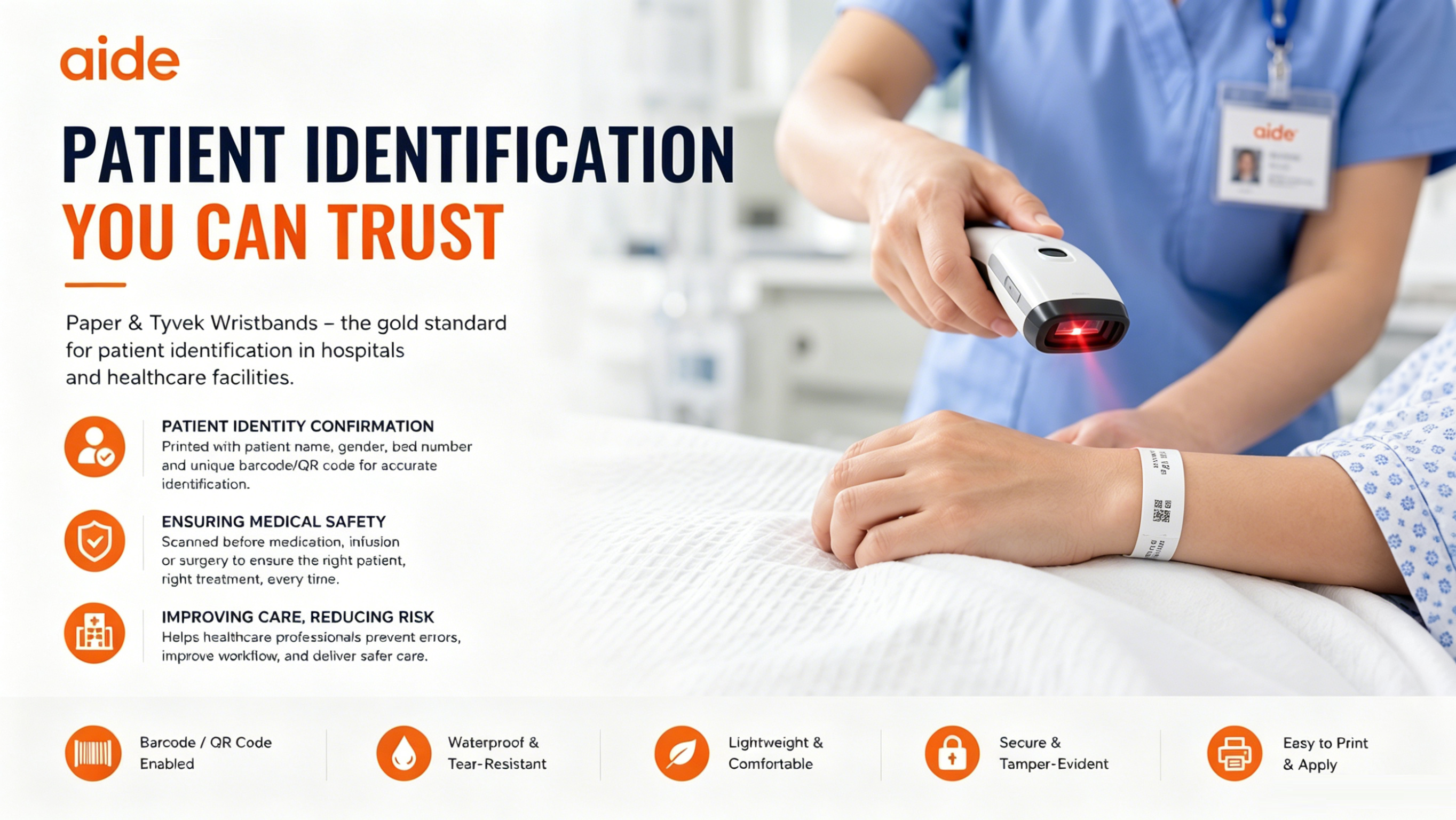
Why Paper & Tyvek Wristbands Remain the Gold Standard for Patient Identification
In modern healthcare environments, accurate patient identification is not just a routine process — it is a critical component of patient safety. Hospitals, clinics, emergency departments, and long-term care facilities rely heavily on reliable identification systems to reduce medical errors and improve operational efficiency.
Among the many identification solutions available today, paper and Tyvek patient wristbands continue to serve as the industry’s gold standard for secure, cost-effective, and efficient patient management.
The Critical Role of Patient Identification Wristbands
Every day, healthcare professionals manage hundreds or even thousands of patients. During treatments, medication administration, laboratory testing, and surgical procedures, a single identification mistake can lead to severe consequences.
Patient wristbands provide an immediate and reliable method for verifying patient identity throughout the entire care journey.
Typically, medical wristbands contain essential patient information such as:
- Patient name
- Gender
- Date of birth
- Bed or ward number
- Unique barcode or QR code
- Medical record number
By scanning the barcode or QR code before administering medication, IV therapy, blood transfusions, or surgeries, healthcare staff can quickly confirm patient identity and significantly reduce human error.
Why Paper & Tyvek Wristbands Are Widely Used in Hospitals
1. Lightweight & Comfortable for Long-Term Wear
Patient comfort is especially important for hospitalized individuals, elderly patients, and newborns. Paper and Tyvek wristbands are extremely lightweight, soft, and skin-friendly, making them ideal for 24/7 wear without causing discomfort.
Tyvek material, in particular, offers:
- Tear resistance
- Waterproof performance
- Breathability
- Latex-free safety
This ensures durability even during showers, hand washing, or extended hospital stays.
2. Fast & Accurate Barcode Identification
Modern hospitals increasingly rely on barcode scanning systems integrated with electronic medical records (EMR) and hospital information systems (HIS).
Printed barcodes and QR codes on wristbands allow medical staff to:
- Verify patient identity instantly
- Match medications accurately
- Confirm laboratory samples
- Prevent duplicate records
- Improve workflow efficiency
This barcode-based verification process plays a major role in reducing medication administration errors and enhancing overall patient safety.
3. Essential for Medication & Infusion Safety
Before medication administration or IV infusion, nurses typically scan both the medication and the patient wristband.
This “scan-before-care” workflow helps ensure:
- The right patient
- The right medication
- The right dosage
- The right treatment timing
As healthcare facilities continue moving toward digital healthcare management, wristband-based verification has become a fundamental safety protocol worldwide.
4. Cost-Effective Solution for High-Volume Healthcare Facilities
Hospitals require patient identification solutions that are both reliable and economical.
Paper and Tyvek wristbands provide:
- Low production costs
- High-volume printing compatibility
- Easy thermal printing
- Rapid patient admission processing
For emergency departments, outpatient clinics, vaccination centers, and temporary medical facilities, disposable wristbands offer an efficient and scalable solution.
5. Anti-Tampering & Security Protection
Many medical wristbands feature secure adhesive closures that cannot be removed and reapplied without visible damage.
This anti-tampering design helps:
- Prevent patient misidentification
- Reduce unauthorized wristband transfer
- Maintain accurate patient tracking
- Improve hospital security management
Applications Across Healthcare Environments
Paper and Tyvek patient wristbands are widely used in:
- Hospitals
- Emergency rooms
- Clinics
- Blood banks
- Laboratories
- Nursing homes
- Rehabilitation centers
- Maternity wards
- Vaccination sites
Different colors can also be used for risk alerts, allergy identification, or department classification to improve clinical efficiency.
The Future of Smart Patient Identification
As healthcare digitalization accelerates, patient identification wristbands are evolving beyond simple printed labels.
Today’s hospitals are increasingly integrating:
- RFID technology
- Contactless scanning
- EMR synchronization
- Real-time patient tracking
- Smart healthcare management systems
However, despite these technological advancements, paper and Tyvek wristbands remain a trusted and highly effective foundation for patient identification due to their simplicity, reliability, and affordability.
Conclusion
Patient identification is one of the most important safeguards in modern healthcare. Reliable wristband systems help medical staff deliver safer, faster, and more accurate care every day.
With excellent durability, barcode compatibility, patient comfort, and cost efficiency, paper and Tyvek wristbands continue to be the preferred choice for hospitals and healthcare institutions worldwide.
As healthcare systems continue evolving toward smarter and more connected operations, high-quality patient wristbands will remain an essential tool for improving patient safety and operational excellence.
Leave a Reply